Back pain & discomfort can be a consequence of Lower Cross Syndrome
Lower cross syndrome is a condition that is characterized by muscle imbalances in the lower body. It is typically characterized by tightness in the hip flexors, which are the muscles located at the front of the hip that are responsible for lifting the leg, and the lumbar extensors, which are the muscles located in the lower back that are responsible for extending the spine.

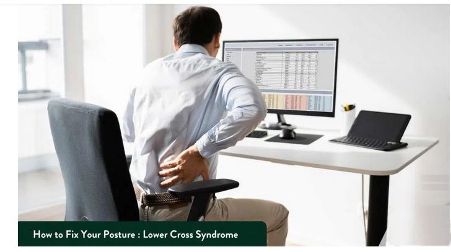
Back pain & discomfort can be a consequence of Lower Cross Syndrome
Lower cross syndrome is a condition that is characterized by muscle imbalances in the lower body. It is typically characterized by tightness in the hip flexors, which are the muscles located at the front of the hip that are responsible for lifting the leg, and the lumbar extensors, which are the muscles located in the lower back that are responsible for extending the spine. At the same time, individuals with lower cross syndrome may also experience weakness in the gluteal muscles, which are the muscles located in the buttocks, and the lumbar stabilizers, which are the muscles located in the lower back that are responsible for maintaining proper spinal alignment.
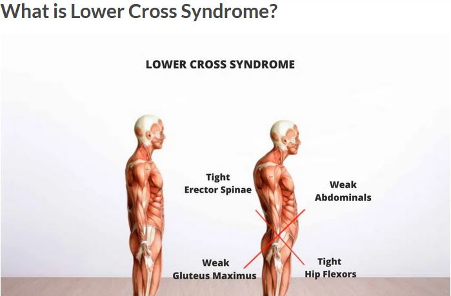
This muscle imbalance can lead to poor posture and alignment, as well as an increased risk of injury. For example, tight hip flexors can pull the pelvis forward and create an exaggerated arch in the lower back, which can lead to back pain. Weak gluteal muscles can also contribute to poor posture and alignment, as they are responsible for supporting the pelvis and maintaining proper alignment of the legs.
Some of the symptoms of lower cross syndrome may include:
1. Poor posture: Lower cross syndrome can lead to poor posture and alignment, as the muscle imbalances can pull the pelvis out of alignment and create an exaggerated arch in the lower back.
2. Back pain: Tight lumbar extensors and hip flexors can cause strain on the lower back, leading to pain and discomfort.
3. Limited range of motion: Tight hip flexors can restrict movement in the hips, leading to a limited range of motion.
4. Weakness in the gluteal muscles: Weak gluteal muscles can contribute to poor posture and alignment, as they are responsible for supporting the pelvis and maintaining proper alignment of the legs.
5. Difficulty standing or walking: The muscle imbalances caused by lower cross syndrome can make it difficult to stand or walk correctly, leading to discomfort and difficulty moving.
If you are experiencing any of these symptoms, it is important to speak with a healthcare professional to determine the cause and receive proper treatment.
Pilates is a system of exercises that was developed by Joseph Pilates in the early 20th century. It is based on the principles of control, concentration, centering, flow, and precision, and aims to improve flexibility, strength, and control of the body. Pilates exercises are typically done on a mat or with specialized equipment, such as reformers or cadillacs, and involve a combination of movement and breath control. The goal of Pilates is to improve overall physical fitness and well-being, as well as to promote balance and proper alignment of the body.
© Pilates Fitness 2025. All Rights Reserved