Arthritis from a Pilates perspective
Arthritis is the swelling and tenderness of one or more joints. The main symptoms of arthritis are joint pain and stiffness, which typically worsen with age. The most common types of arthritis are osteoarthritis and rheumatoid arthritis.
Definition of Arthritis
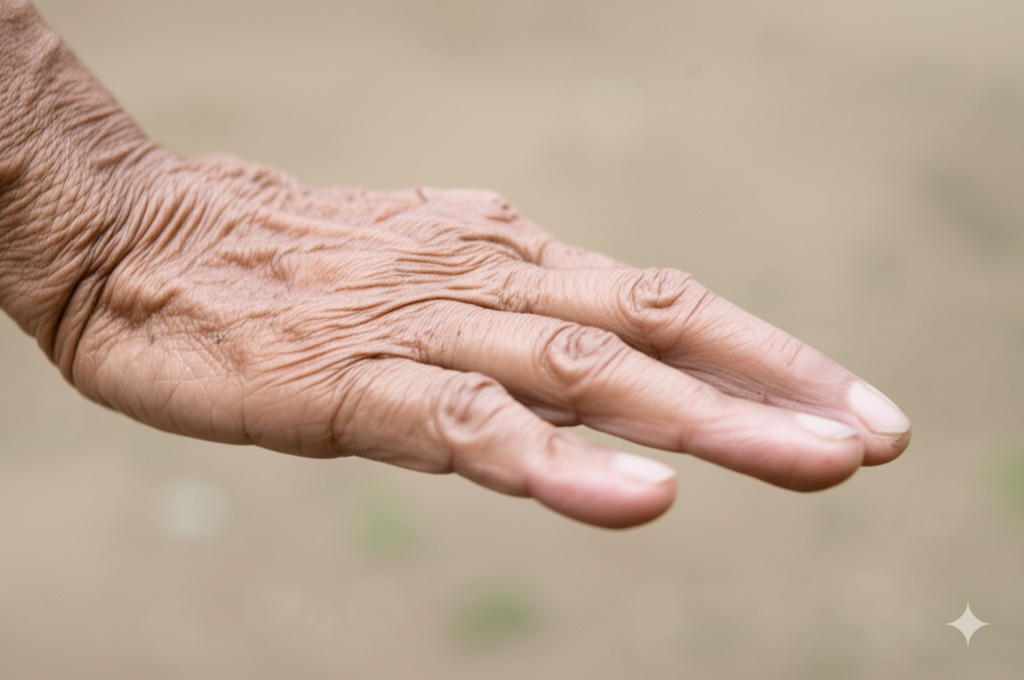
Arthritis is the swelling and tenderness of one or more joints. The main symptoms of arthritis are joint pain and stiffness, which typically worsen with age. The most common types of arthritis are osteoarthritis and rheumatoid arthritis.
Types of Arthritis
Osteo-arthritis occurs when cartilage (the hard, slippery tissue that covers the ends of bones where they form a joint), begins to break down.
Rheumatoid arthritis on the other hand is a disease in which the immune system attacks the joints, beginning with the lining of joints.
A Gout-arthritis occurs when there's too much uric acid in your blood, thereby resulting in the deposit of Uric acid crystals into & around a, or a number of joints.
Arthritis can also become a consequence following Infections or underlying disease, such as psoriasis or lupus.
How does Arthritis comes about?
Arthritis is often blamed on old age, Genetics, & even an act of GOD, but many a times, self-inflicted is over looked, & I will try to explain how.
Osteoarthritis, usually comes about due to poor biomechanics. Walking with arches collapsed instead of mind fully lifting them up while walking; standing with hips out to the side, to mention a few. This is usually learnt behaviour which never is remedied, where a certain group of muscles have learnt to be lazy & uncooperative while the remainder over work resulting in wear & tear.
Long term Pathologies like Subluxations, can eventually lead to Arthritis – "Subluxation" is a term used by some chiropractors to describe a spinal vertebra that is out of position in comparison to the other vertebrae, possibly resulting in functional loss and determining where the chiropractor should manipulate the spine.
Lifestyle & Occupational hazards which result in tighten muscles which increases the force of one bone onto the other, within a joint. An example is lazy Glute muscles will result in overactive hamstrings & ileal tibeal band, thereby putting excessive & unnecessary stress on the knee or hip joint, resulting in the many hip & knee replacements.
Rheumatoid, & auto-immune arthritis usually triggered by leaky gut (4). That is an article on its own
Gout is usually dietary & very very much, stress related
But an overlooked cause of Arthritis is Psychological. How?......
1) A lack of Cortisol
The Covid pandemic gave the insight clue to the cause & remedy of Covid. During Covid, it was not the virus that killed so many people, but the over inflammatory reaction of the body when the virus infected. So what in the body is suppose to put a dampen on inflammation?….Cortisol. Similarly when one moves a body part be it as small as the baby toe or as big as the upper leg bone (Femur), that joint becomes inflamed. To put out the inflammation, Cortisol is secreted. But many humans, don’t have enough Cortisol, because most of ones daily ration of Cortisol has been wasted & all used up in the 1st few hours after opening up their eyes in the morning after waking. Factors that increase the excess in the secretion of Cortisol in the human population is:
· Individuals who are over stressed with anger, anxiety & fear. A number of my clients are only now recognising that when ever there is an Arthritic inflammatory attack, my 1st question to them is….Who upset you…& I am usually 80% right
· Those who have too much on their plate
· the fact the mind never is at rest or mindful, but hyper-active,
· Too much caffeine consumption products
2) Emotions affect biomechanics
Scientific Journals (5,6) as well as Using applied kinesiology principles, when a subject recalls a strenuous life event, when the past issue is not addressed correctly resulting in subconscious remnants, the end result is a weaker & poorer muscle firing sequence ratios, resulting in poorer biomechanics. This is because although the majority of muscle action is subconscious and very little is conscious execution, past memories in the mind, is linked to the brain, which is then linked to the nerve pathways from the brain which affect the muscles where those nerves end.
3) Biomechanics affect emotions
Because of the guarding & pain, the arthritic suffer begins to doubt their bodies or specific limb from functioning or robustness. This will result in a lack of faith in their joint & themselves. A growing body of empirical research also suggests that exercise has long-term effects on well being as well. Improvements in mood and well being have been reported by regular exercisers in both clinical and non-clinical populations and with most types of exercise. Baseline levels of anxiety are lower in individuals who exercise regularly as compared with sedentary adults. Thus, exercise appears to be a potent stress reducer as well. Because depression is a concern for individuals with arthritis, physical activity is an important psychological adjunct to treatment. Though more research is warranted to confirm these findings, preliminary studies suggest that moderate-intensity lifestyle exercise, such as walking & Pilates, is as effective as traditional vigorous aerobic exercise for mild depression & in improving mood.
4) Food.
Dischem offers a Food Blood reactive test which measures the blood reaction to at least 150 different foods. The difference to that of Lancet laboratories & Ampath, the compound reaction they measure is a blood protein called IgG, where as Lancet laboratories & Ampath measure proteins called IgA & IgE. IgG is a more related to autoimmune disorders.
Arthritis & Exercise
There is much Medical & scientific research illustrating the benefits of exercise & the various forms of Arthritis. (1, 2, 3).
Anatomical benefits
The body has a Mantra. Use it or loose it. Therefore when muscles or nerves or even organs are not utilized, then the body will tend to resorb it or break it down. This usually will occur when the Arthritic is experiencing pain. Guarding of the joint as well as joint movement restriction begins to occur. The resulting action is the muscles in and around that joint begin to waste away, leaving the joint more vulnerable & lacking support. This renders the joint more vulnerable both biomechanically as well aswhen a load is added to the joint. Regular physical exercise regarding the joint will have the following benefits:
1) Increase in muscle tone. This means the more muscle personal, which means more sharing of the joint load thereby increasing the capability of keeping bones in place of the joint on movement, therefore less wasted bone movement which would result in inflammation & pain, therefore stronger joints prevail.
2) Decrease bone loss , preventing osteoporosis, & possible cracks or breaks in bones on falling.
3) It will also preserve or restore range of motion and flexibility around affected joints,
4) Increase aerobic conditioning not only generally, but with regards to the local muscles in & around the joint which many people don’t think of.
5) Increase blood distribution to the affected area, brings in the necessary anti-inflammatory mechanisms, oxygenation & required anti-oxidants necessary as much free radicles are liberated by such affected pathologies.
6) With any pathology, there is an “X” amount of irreversible damage; a “Z” amount of healthy tissue as well a s a “Y” amount of grey area of reversible damaged tissue. Exercise is one of the remedies that will prevent that reversible damge, from becoming irreversible.
Exercising the arthritic affected area will have a secondary general systemic health spin-off like reducing the risk of :
• coronary artery disease
• serum lipid abnormalities
• hypertension
• diabetes
• osteoporosis
• obesity
• colon cancer
• enhance energy and stamina by decreasing fatigue and improving sleep.
• Enhance weight loss and promote long-term weight management in those with arthritis who are overweight.
Pilates & the Arthritic client
Health care providers often advise patients to rest and avoid exercise during acute flares. Thus, it is easy to understand why some individuals with arthritis mistakenly perceive that all physical activity is undesirable, will only aggravate or worsen their arthritis and should be minimized. It is important to explore with patients their beliefs about exercise, as well as to help them identify barriers and misinformation.
Physical activity counselling is most effective when it is tailored to the individual’s physical and psychological needs. Important considerations in tailoring the advice are:
1) Level of readiness of the Arthritic to be more active;
2) Confidence to begin exercising;
3) Expectations about the benefits the person will receive by being more active;
4) Previous experience with physical activity; and
5) Current lifestyle. Discussions should focus first on encouraging physical activity and allaying fears, as well as helping patients to identify opportunities to become more physically active.
6) Boost confidence and guide them in gradually increasing their levels of physical activity.
Pilates teachers the individual to:
1) Be aware of their limits. Not many people are aware biomechanically the 100% limit of a joint. Too many people exceed their joint limits resulting in joint backup system being initiated like ligaments which one can associate as wires. Muscles are springs and can expand & recoil therefore takes stress. Wires can’t expand & recoil. They take full the full brunt, become inflamed with much free radicle production which encourages joint deterioration, & eventually snap.
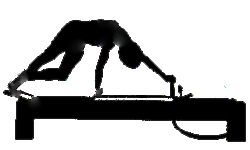
2) Correct alignment while initiating movement. While using the Pilates bed for example, there are exercises which demonstrate to the arthritic what is the definition of straight. The limbs are not bent that over emphasize Hamstrings, & not over extended which over emphasize quad muscles.
3) Poor multi-tasking capabilities. It is amazing how many people can multi task for example putting on lip stick while driving, while at the same time, smoking a cigarette, and talking on a cell phone, yet can’t walk, while being mindful to keep arches up nor glutes or stomach muscles engaged. Talking while shoulders in their ears is not a problem either, however correct standing & posture is impossible.
4) This point more reiterates point 3. Pilates teaches one to become more aware of which muscles have come to the party regarding the biomechanical movement who should not be there & which muscles who ain’t there while limb or body part movement. If glutes & abdominals are not coming to the party while the limb is moving, then the Hamstrings & ileal-tibeal band will be the dominant faculties, which will eventually lead to pelvic collapse & over work of back muscles & an increase in knee angle instead of square upper leg on lower leg which can eventually lead to arthritis in both areas.
5) When individuals become impressed on their capabilities in a Pilates program, it breaks the self-hypnosis of self-doubt that pain & restriction reinforces. The client becomes more impressed what they can do & slowly restoring faith, instead of harping on their disease & their limitations, which maybe a small percent in their world, & making “it”, their whole world. Remember, faith can move mountains.
6) Pilates exercises not only tones & builds muscles as well as flexibility, but empowers those clients who are willing to learn how to fish, biomechanical tools to use out their when they leave the studio for the big wide world. Instruction is not just bound for studio purposes but to be integrated into their everyday life. As mentioned above, much of the biomechanical disease is from poor or incorrect biomechanical ingredients or bad habit picked up when we the human species converted from the crawling stage to the upright walking stage. We were only 1 or 1 ½ yrs at that time. But we are now adults & I still believe you can always teach an old dog new tricks, unless their own cup is over full.
Difficulty treating Arthritic patience.
Its like any other pathology or disease.
1) Ignorance.
2) Many don’t want to take responsibility for their pathology or…Cant be bothered!
3) Similar to point 2, but many arthritic patience would prefer to be given fish than want to learn how to Fish. They prefer a tablet, or chiro, physio, or surgeon, nutritionist, Biokineticist & even Pilates instructor to deal with the arthritis. The above mentioned professions are “an ingredient”, not “The ingredient” to remedying the issue & the greatest remedy which most of the time is the arthritic patient unwilling to change their old self inflicting life-style.
4) Some even enjoy being victim. Understand this most of the time not conscious, but rather unconscious.
As Confucius state, “You can have the right master & right Philosophy, but it is equally important to have the right student”
1. Benefits of Exercise in Rheumatoid Arthritis; Jennifer K. Cooney,1 et al; J Aging Res. 2011; 2011: 681640. Published online 2011 Feb 13. doi: 10.4061/2011/681640; PMCID: PMC3042669; PMID: 21403833; https://www.ncbi.nlm.nih.gov/pmc/articles/PMC3042669/
2. Ettinger WHJ, Burns R, Messier SP, Applegate W, Rejeski WJ, Morgan T et al. A randomized trial comparing aerobic exercise and resistance exercise with a health education program in older adults with knee osteoarthritis. The Fitness Arthritis and Seniors Trial (FAST). JAMA 277(1):25-31,
3. Pate RR, Pratt M, Blair SN. Physical activity and public health: A recommendation from the Centers for Disease Control and Prevention and the American College of Sports Medicine. JAMA 272:402-407, 1995.
4. The Connection Between Leaky Gut and Arthritis https://www.ifm.org/news-insights/ai-connection-leaky-gut-arthritis/
5. Emotions alter muscle proprioceptive coding of movements in humans; Published: 16 August 2017; Rochelle Ackerley, Jean-Marc Aimonetti & Edith Ribot-Ciscar ; Scientific Reports volume 7, Article number: 8465 (2017); https://www.nature.com/articles/s41598-017-08721-4
6. Changes in emotional state modulate neuronal firing rates of human speech motor cortex: A case study in long-term recording; Neurocase. Author manuscript; available in PMC 2012 Oct 1; Published in final edited form as:; Neurocase. 2011 Oct; 17(5): 381–393. ; doi: 10.1080/13554794.2010.532137; PMCID: PMC3187572; NIHMSID: NIHMS263292; PMID: 21967282; https://www.ncbi.nlm.nih.gov/pmc/articles/PMC3187572/
© Pilates Fitness 2025. All Rights Reserved