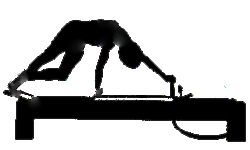
4 point kneeling - The extreme Biomechanical importance
This exercise works on your ability to keep a neutral spine during dynamic isolation of each limb.
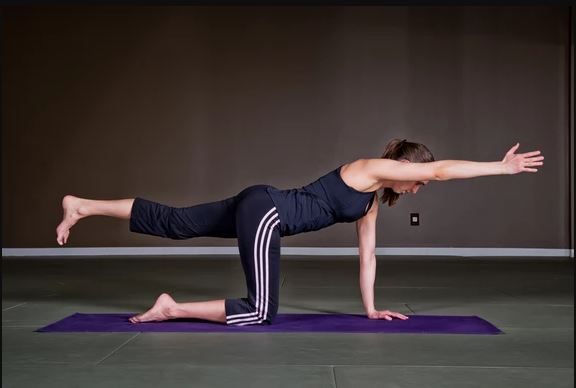
- This exercise works on your ability to keep a neutral spine during dynamic isolation of each limb.
- It Develops low level rotational, anterior and posterior chain control.The posterior chain is the muscles on your backside; hamstrings, glutes, lats, scapular retractors, and rotator cuff muscles. That means the anterior chain is the opposite; muscles that are in front of your body! These include the quads, core, and pectoral muscles.
- It educates the body the integration of opposition muscles (Core: buttocks abdominals & inner thighs) while the execution muscles (arms & legs) are at play. Any error while executing this exercise will depict the bad habits the individual will have for example while walking in the big wide world.
Here’s how to do it:
1)Start off hands under shoulders, knees under hips. Shoulders set down in neutral.
2) Tilt your pelvis into anterior and posterior tilt then find where NEUTRAL is (should be a slight curvature in your lower back).
3) Draw in through the lower abdomen to engage your CORE. That is, draw ones belly button up to the spine, & clench ones Glutes
4) Lift up one arm and slowly extend it out in front then control it back to its starting position. Cycle through each upper and lower limb. Keep your spine neutral the whole time.
Progressions:
Liftupyourdiagonalarmandlegthenextendthemout,lengtheningoutyourbody.Thisincreasestheemphasisonrotationalstabilityandtargetsyourposteriorobliquesling – Hamstring, Sacro-tuberous ligament & the Erector spinae muscles
Same as above except bringing your opposite elbow to your knee, meeting in the middle. This forces you to move in and out of neutral spine in a dynamic manner.
Errors to avoid
- Avoid arching the back when extending the leg backwards. This means each time while walking and the leg extends backwards, the pelvis will arch increasing the Lordosis in the spine in order to aid moving the leg backwards
- The leg extends back and up to the ceiling using ones Glutes, not ones Hamstrings. The ratio of Glutes to Hamstrings must be predominantly Glutes as excessive Hamstring use will result in tighter Hamstrings & 80% of all lower back problems are tight Hamstrings
- When the leg goes back & too the ceiling, beware of pelvis rotation. If the pelvis begins to rotate, that is because the opposition is not strong enough or one is not mindful. Pelvic rotation on the 4-point kneeling exercise, means pelvic rotation while walking in the big wide world . This excessive pelvis rotation will result in a lot of wear & tear in the lower lumber vertebral discs as well as the Sacroiliac junction for which chiropractors are endlessly treating. Besides mega back issues, uncontrolled pelvic rotation, can also be responsible for the hip & knee pathologies & replacements
- Shoulders in the ears. That is correct. Many people are unaware with regards to when using their legs, their shoulders creep up into their ears.
When executing the 4 point kneeling the correct way, will result in new Biomechanical information deposited into the Subconscious mind & thereby offering invaluable Biomechanical tools for a healthy, agile body in our later years
Tips:
1)Ifhavingtroublemaintainingneutral,placeawaterbottleorfoamrolleronyourlowerbackandperformtheexerciseswithoutlettingitrolloff.Don’tbecometooreliantonthisthoughasyouneedbetoabletomaintainneutralspineonyourown.⠀2)Keepyourspineinlinewithanimaginarycentrelinetopreventshiftingyourhipstoeitherside.⠀3)Tryandstretchout (arm & leg)towallinfrontorbehindyou,ratherthanliftingtowardstheceiling if pelvis starts to arch or rotate.4) The balancing comes from the Core muscles (abdominals; glutes & inner thighs). Try to avoid too much using the wrist or hand, shoulders, hip flexors or quads
© Pilates Fitness 2025. All Rights Reserved